
As I consider updates to my book, Breathe, Sleep, Thrive, published in 2022, I keep coming back to a question I never expected to ask: What does DOME actually mean today?
My journey into dental sleep medicine began with treating adults experiencing snoring and obstructive sleep apnoea using mandibular advancement devices. While these appliances remain an important treatment option, I found myself drawn to two questions. Why couldn’t we help the jaws develop optimally in the first place? And why couldn’t we promote nasal breathing and airway health around the clock, rather than simply addressing snoring and airway obstruction during sleep?
We knew that early interceptive orthodontics could influence jaw development during childhood, and the late Dr Christian Guilleminault, a pioneer in sleep medicine, had published research supporting the potential role of maxillary expansion in managing paediatric obstructive sleep apnoea. But what could we offer adults whose jaws had already developed?
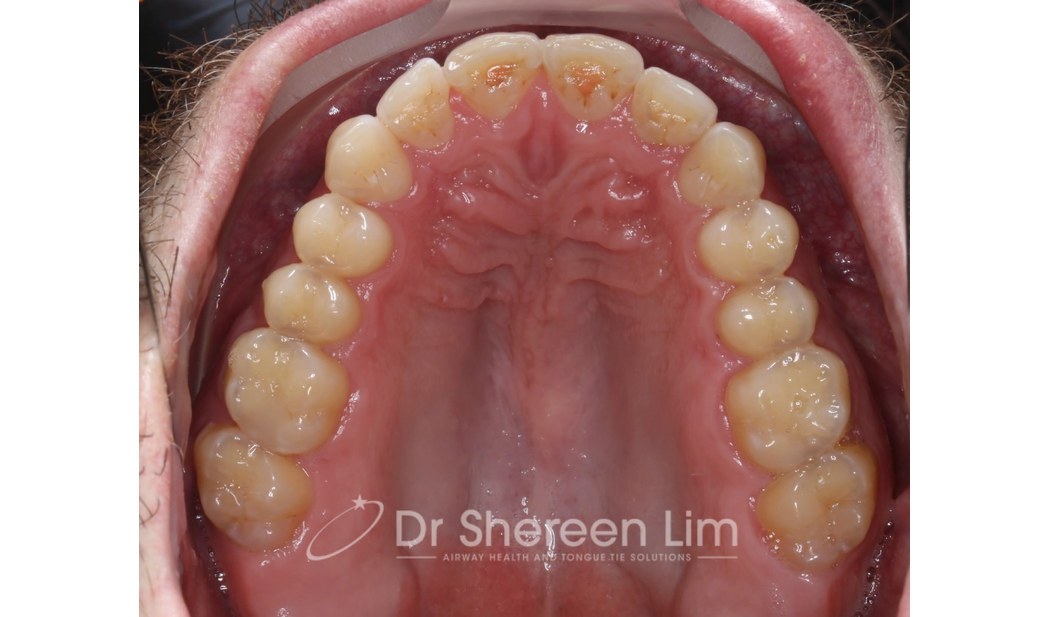
In 2017, at the AAMS meeting in Chicago, I was introduced to pioneering Stanford research by Dr Stanley Liu and Dr Audrey Yoon and their colleagues, exploring a new approach to adult maxillary expansion as a targeted intervention to improve nasal breathing and alleviate obstructive sleep apnoea in patients with narrow, high-arched palates. Distraction Osteogenesis Maxillary Expansion (DOME), with its clever architectural analogy of transforming a narrow, high-arched palate into a broader dome shape, captured my imagination.
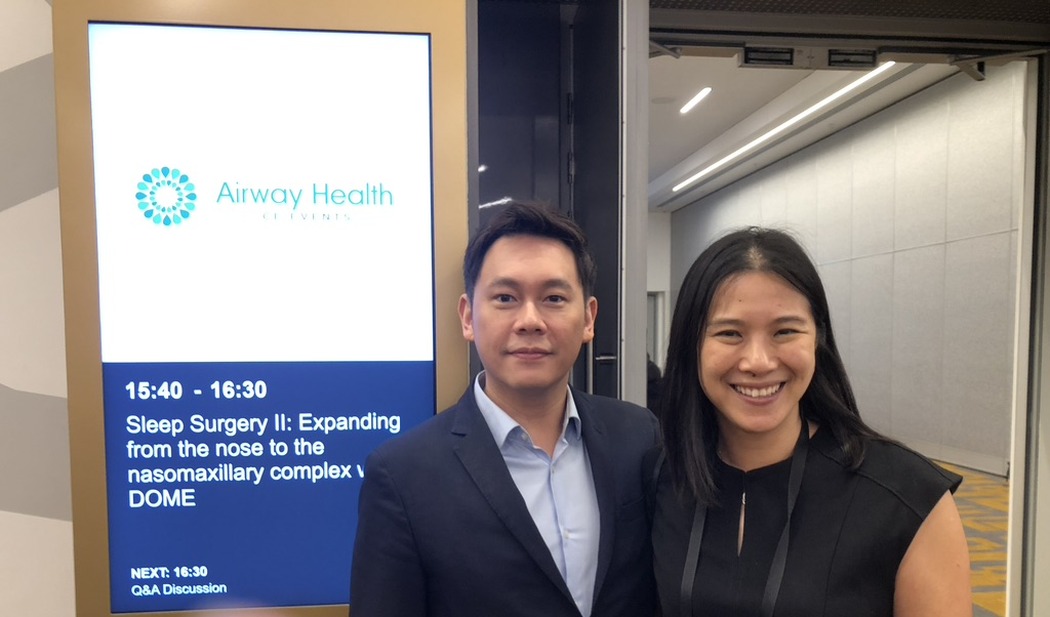
Later that year, I had the opportunity to shadow Dr Guilleminault and Dr Liu at Stanford, listening to their discussions with patients and seeing firsthand how DOME was incorporated in the approach to precision sleep medicine for sleep apnoea patients. I also spent time with Dr Liu and Dr Yoon at the World Sleep Congress in Prague, where they and their colleagues presented their research and brought the value of maxillary expansion to the forefront in multiple talks and symposiums to an international sleep medicine audience.
I followed their research closely, shared it widely with colleagues and helped bring both clinicians to Australia on several occasions to present their work. I championed it so enthusiastically that my first orthodontic mentor, Dr Derek Mahony, used to joke, “For Shereen, all roads lead to DOME!”
When I published Breathe, Sleep, Thrive, DOME was one of the developments in adult airway treatment I was most excited to share, and I devoted considerable attention to it in my book.
That enthusiasm is exactly why the name matters to me now.
DOME and its scientific identity
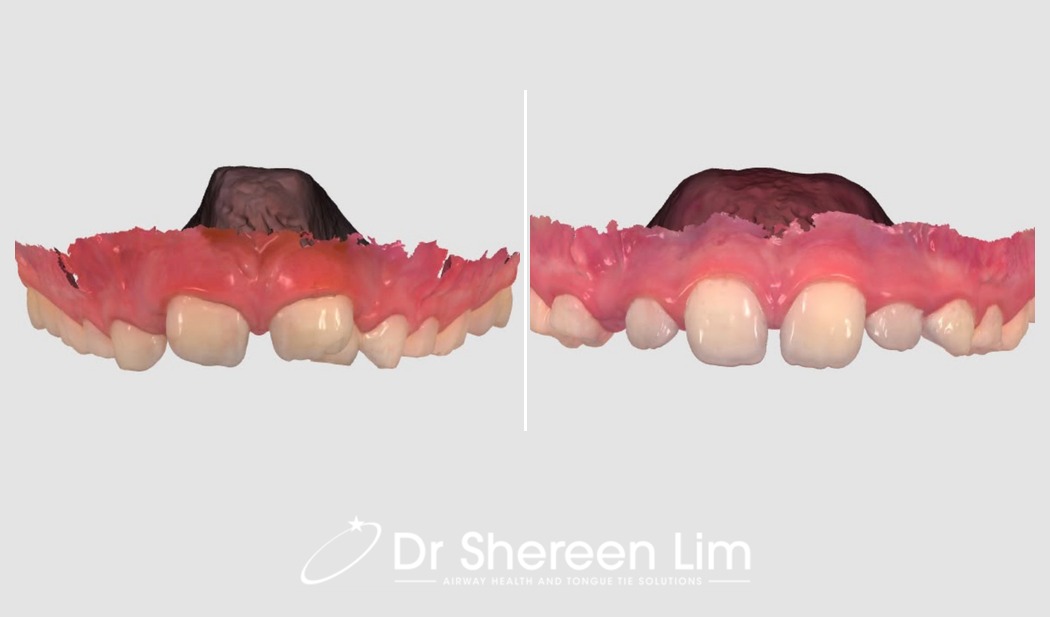
DOME was more than a clever acronym. Inspired by the vision of Dr Guilleminault and brought to life through the collaboration of Dr Liu and Dr Yoon, it was a defined surgical protocol combining miniscrew-supported expanders with targeted surgical bone cuts. The aim was to overcome resistance to expansion in the mature facial skeleton and maximise skeletal expansion and nasal airway benefits through a less extensive surgical approach than those traditionally used for adult expansion.
What particularly excited me was the Stanford team’s trail of publications exploring not only whether adult maxillary expansion could improve breathing and sleep, but also why it might work and which patients might benefit.
Among the interesting findings and areas of investigation were:
- Improvements in nasal obstruction and reductions in obstructive sleep apnoea severity in selected patients with narrow, high-arched palates.
- Anatomical changes in the internal nasal valve region and their relationship to improvements in nasal breathing.
- A proposed physiological mechanism linking improved nasal airflow to reduced upper airway collapsibility during sleep.
- The potential role of maxillary expansion in helping patients with persistent nasal obstruction despite previous nasal surgery.
While much of this early research was retrospective and involved selected patient cohorts, its value extended beyond the clinical outcomes of DOME itself. It helped advance our understanding of the relationship between maxillary anatomy, nasal breathing and obstructive sleep apnoea in adults.
This work made its way into peer-reviewed journals and dedicated textbook chapters across sleep medicine, pulmonology, otolaryngology and maxillofacial surgery.
The original surgical protocol continued to evolve with the publication of MINE-DOME (Minimally Invasive Nasal Endoscopic DOME). This approach involved performing the surgical bone cuts endoscopically through the nose rather than lifting the gum tissue above the upper teeth, aiming to achieve similar airway benefits while reducing postoperative discomfort and complications associated with the original surgical access.
It also brought a procedure largely performed by maxillofacial surgeons into the familiar surgical territory of ear, nose and throat (ENT) surgeons, potentially enabling appropriately trained ENT surgeons to incorporate maxillary expansion into their practice alongside other nasal procedures. Rather than focusing solely on addressing obstructions within the nose, there was greater scope for addressing the dimensions of the nasal cavity itself – essentially, expanding the box!
MINE-DOME represented a direct scientific evolution of the original protocol, with a refined surgical technique and its own published research.
Through the collective efforts of a multidisciplinary team, DOME had earned a scientific identity that extended well beyond dentistry.
A rapidly evolving field
Since Breathe, Sleep, Thrive was published, advances in three-dimensional imaging, miniscrew positioning, customised appliance design and expansion techniques have enabled clinicians to achieve skeletal expansion in many adults without surgical assistance.
One of the people continuing to advance this field is Dr Yoon herself. She continues to refine customised nonsurgical expansion techniques, publish research, including a recent study of 100 consecutive adult MARPE patients, and educate orthodontists internationally. In a recent podcast interview, she reflects on her role in developing DOME and describes how infrequently she now needs to offer DOME surgery to her patients.
I think this is a wonderful example of scientific progress. Surgery still has an important role for selected patients, but the possibilities for nonsurgical adult maxillary expansion have grown considerably.
MARPE (Miniscrew-Assisted Rapid Palatal Expansion) has become a widely recognised umbrella term for miniscrew-supported expansion appliances and protocols. While many contemporary providers favour slower expansion and the term MASPE (Miniscrew-Assisted Slow Palatal Expansion) is sometimes used, MARPE remains the more widely recognised term.
Whether using fully customised appliances, established designs such as the Maxillary Skeletal Expander (MSE), or newer developments such as the Facegenics Midface Expander (FME), it’s exciting to see clinicians and researchers around the world contributing their own innovations.
These developments can establish their own identities while remaining part of a shared clinical and scientific vocabulary.
One name, many meanings
I loved the clever acronym DOME when I was first introduced to this research. But I’m less convinced that it helps the field to redefine an established surgical protocol with published outcomes as a broader treatment concept.
In a video, orthodontist Dr Claudia Pinter, co-founder of DOME Zero, a DOME course director and creator of DOMEteen and DOMEmini, explains:
“With all the different names for maxillary expansion – MARPE, SARPE, RPE – it can get quite confusing. So the cool thing about ‘DOME’ is you can use it for any type of expansion.”
I agree that the terminology can be confusing. But to me, this is precisely where further confusion begins. DOME already has an established meaning in the scientific literature.
Dr Yoon, meanwhile, continues to use the widely recognised term MARPE in her research and teaching.
The evolution of the field and the evolution of the DOME name are not necessarily the same thing.
We now have DOME Zero, DOMEteen, DOMEmini and Dome4Kidz. And remember MINE-DOME? MINE-DOME and DOMEmini sound remarkably similar, yet one is a published surgical evolution of the original adult DOME protocol, while the other describes a paediatric expansion approach.
So when someone refers to DOME today, do they mean a surgical procedure, a nonsurgical expansion protocol, a commercial service, an educational programme or an overarching treatment philosophy? Is this really simplifying the terminology?
DOME Zero is a branded approach within the broader field of MARPE, incorporating customised, bandless, bone-borne expanders, slow expansion and synchronised clear aligner treatment to manage the diastema (midline gap) and the bite. These individual clinical features are not unique to DOME Zero and are also used by others offering contemporary MARPE.
The approach was originally known as MASPE Zero and was later renamed DOME Zero, when Dr Liu joined as a co-founder.
What distinguishes DOME Zero is its centralised virtual treatment planning service, whereby miniscrew positioning, expander design and clear aligner therapy are planned by the DOME Zero team in conjunction with designated laboratory and clear aligner partners.
While this model may improve access to treatment, support clinicians newer to the field and facilitate consistency in future multicentre research, any additional clinical advantages over contemporary MARPE approaches remain to be demonstrated.
Why terminology matters
We’ve worked hard to bring the potential role of maxillary expansion to the attention of our medical colleagues. When a clinician reads a publication on DOME, or hears that a patient has undergone DOME, there should be a shared understanding of which clinical intervention is being discussed. Just as maxillary expansion for breathing purposes is gaining wider recognition across disciplines, redefining an established scientific term risks undermining that progress.
In an educational webinar, a Dome4Kidz course director acknowledged that dental colleagues had mistaken the course, which focuses on paediatric airway health, for a surgical course. And if professionals are experiencing confusion, how can we expect patients to navigate this terminology?
Patient advocates are doing valuable work helping patients navigate this increasingly confusing landscape. For an insight into the discussions taking place within the patient community, I encourage you to watch these videos by Matt (@mattattacc), JawHacks. and JawGirl. But surely, as healthcare professionals, we have a responsibility to make this information clearer in the first place.
In fact, one of the reasons I began looking more closely at this terminology was that a patient who had read my book was considering travelling interstate specifically to access DOME Zero.
With a clearer understanding of what DOME Zero is, patients may discover experienced MARPE providers closer to home offering similar clinical approaches. If they are prepared to travel, there are also highly experienced providers working independently of the DOME Zero planning service.
Being independent doesn’t guarantee expertise, and neither does belonging to a brand. If I were considering adult maxillary expansion, I would be far more interested in the clinician’s experience, understanding of sleep medicine, treatment outcomes, clinical judgement and ability to manage complications than simply the name of a treatment.
Travel for the expertise of a clinician, not simply for the name of a treatment. The terminology we use should help patients explore their options, not inadvertently narrow them.
Perhaps my greatest concern, however, is the blurring of the distinction between what has been researched and what is being offered.
I welcome innovation. Every innovation has to start somewhere — the original DOME protocol did too. I look forward to seeing research investigating the newer DOME-branded approaches and their specific clinical outcomes.
But evidence belongs to the specific intervention studied. The involvement of one of the original pioneers in a new clinical approach or commercial venture does not automatically mean that the evidence supporting the original protocol also applies.
Scientific credibility cannot simply be inherited through a shared name or a shared founder.
A shared language for an evolving field
Do we really need another umbrella term for maxillary expansion?
I would personally love to see DOME retain its original scientific meaning, with MARPE continuing to serve as the widely recognised umbrella term for miniscrew-assisted palatal expansion.
There is already discussion about the suitability of the term MARPE itself, particularly as more clinicians adopt slower expansion protocols. I’m encouraged to see efforts being made, including through surveys, to seek input from the wider clinical community on how this terminology might evolve.
With so many acronyms, appliance names and brands emerging, wouldn’t it be helpful to develop greater consistency in how we describe the treatment itself?
Is the appliance fully bone-borne or hybrid (tooth-and-bone-borne), fully customised or of a standard design? Is surgical assistance used, and if so, what type? What is the rate of expansion, and how are the diastema and the bite managed? Is treatment planned independently by the treating clinician or with the support of an external commercial planning service?
Having a consistent way of describing these differences would help clinicians and researchers compare approaches more meaningfully and help patients better understand the options available to them.
Where I was once an enthusiastic champion of DOME, I now find myself having to clarify what I mean when I use the term. My appreciation of the original research remains unchanged, but I don’t want my enthusiasm for that work to be mistaken for an endorsement of the broader use of the name or the commercial ventures associated with it. For transparency, I don’t provide adult palate expansion, and I have no financial ties to any of the approaches, programmes or brands discussed here.
I’m encouraged to see leading educators collaborating together through initiatives such as MARPE Masters, sharing their knowledge, diverse clinical experiences and perspectives to collectively advance the field. I’d love to see more of this.
We don’t need to subscribe to the same treatment philosophy, use the same appliances or belong to the same commercial network to learn from one another. Surely a shared scientific language, rather than a shared brand, would better serve an evolving field.
Perhaps the answer isn’t to create another umbrella term, but to become more precise in how we describe what we actually do. We can celebrate innovation, recognise the contributions of our pioneers and allow new approaches to develop their own identities without blurring the boundaries between established evidence and emerging practice.
Honouring the pioneers
I remain appreciative of the contributions of Dr Guilleminault, Dr Liu, Dr Yoon and their Stanford colleagues. Their pioneering multidisciplinary work helped advance our understanding of adult maxillary expansion as a targeted anatomical intervention for nasal obstruction and obstructive sleep apnoea.
That is exactly why I would love to see its scientific identity preserved.
My first orthodontic mentor once joked that, for me, all roads led to DOME.
But in retrospect, DOME was never the destination. The destination was always better sleep and airway health for our patients. DOME was a trailblazing approach that helped pave the way for many others.
The true legacy of pioneering work lies not in how far we can extend its name, but in how much new thinking and innovation it inspires.